Dystopian Movies
Plenty of dystopian movies are out there: Blade Runner comes to mind, The Matrix, 1984, Alien, Hunger Games, Terminator, Mad Max, The Time Machine, Planet of the Apes, to name a few.
Some protagonists escape their gloomy surroundings. They may see better days, but it remains a fight for survival, and the dystopia continues.
Since dystopian movies are popular and have been dominating the Sci-Fi genre for decades, it is quite challenging to find full-blown Solarpunk films. Given the fact that Solarpunk itself was only coined in 2008, there are basically none.

Selection of Films with Solarpunk Elements
Here are some criteria for identifying films that contain at least partial Solarpunk elements:
- An optimistic or hopeful ending
- A society that transforms into — or already embodies — structures aligned with Solarpunk principles
- Highly advanced technology presented as compatible with ecological and social balance
Based on these criteria, the following films may qualify and are listed below.
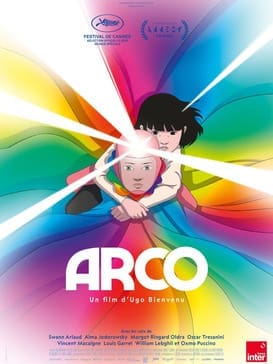
ARCO
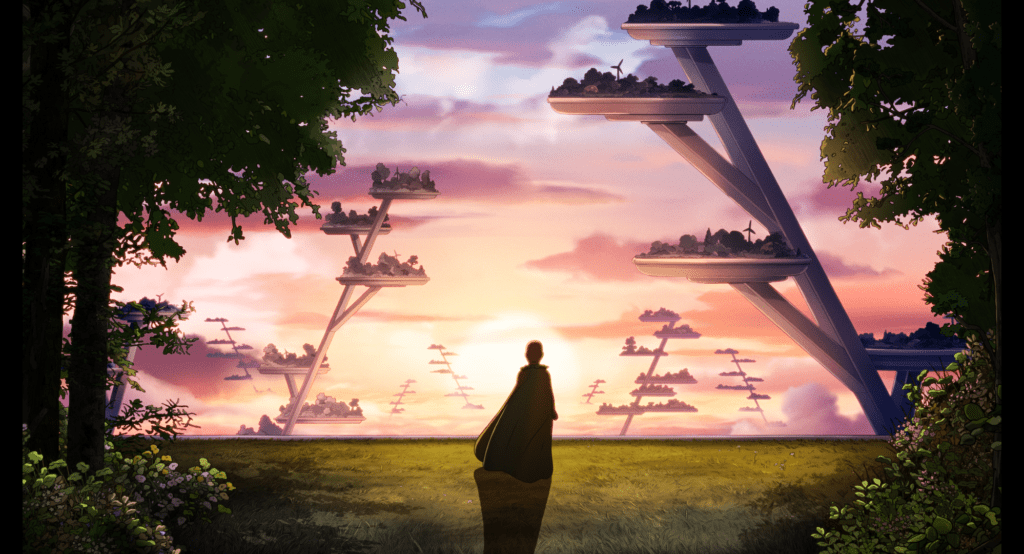
Arco (2025) presents a gentle, optimistic vision of the future through the eyes of a child who comes from a far-future society shaped by harmony, care, and advanced yet humane technology.
The film contrasts this hopeful future with a more fragile near-future world, suggesting that ecological balance, imagination, and human connection are choices rather than inevitabilities. While subtle and poetic rather than programmatic, ARCO aligns with Solarpunk values by framing technology as supportive, curiosity as transformative, and the future as something that can still be shaped toward coexistence between people, environment, and innovation.[1]
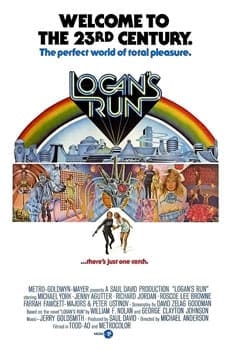

Logan’s Run
Logan’s Run (1976), based on the 1967 novel by William F. Nolan and George Clayton Johnson, follows two citizens fleeing an AI-controlled city where life is capped at 30.
Discovering nature and the sun for the first time, they return with a truth the system can’t process — triggering its collapse. As the dome falls and people step out of their former habitat into the open world, the ending opens a distinctly Solarpunk horizon: a chance to reconnect with nature, rebuild collectively, and imagine life beyond imposed limits.[2]
WALL·E
WALL·E (2008) embodies the Solarpunk spirit through its protagonist’s resilience, curiosity, and care for life, even in a damaged and desolate world. The film’s conclusion — in which humans return to Earth and begin the work of restoration — closely mirrors a Solarpunk vision of the future, where technology supports healing the planet and reestablishing a balanced coexistence with nature.
Ultimately, WALL·E offers an optimistic message of redemption and learning, aligning with Solarpunk’s belief that humanity can acknowledge past mistakes and consciously build a more sustainable and harmonious world.[3]
TRON: Ares
TRON: Ares (2025) ends with the digital and physical worlds opening toward one another rather than remaining sealed and controlled. One of the main characters succeeds in bringing a digital orange tree into the real world, demonstrating that advanced technology can become living and enduring. Intended as a shared achievement rather than a private asset, the tree symbolizes a solarpunk future in which technology supports ecological renewal, openness, and coexistence beyond closed infrastructures.[4]

Black Panther
Black Panther (2018) and Black Panther: Wakanda Forever (2022) both present Wakanda as a vision of a future largely free from many of today’s environmental and social crises.
Across both films, technology is framed as a tool for collective well-being rather than domination, with vibranium enabling clean energy, advanced infrastructure, and long-term sustainability. Wakanda’s emphasis on conservation, cultural continuity, and inclusive social structures closely aligns with Solarpunk values, offering an optimistic model of how technological advancement and ecological balance can coexist.[5]

La Belle Verte
La belle verte (1996) imagines a civilization that has moved beyond the industrial city altogether. Free of money, hierarchy, and large-scale industry, its inhabitants live in direct relationship with the planet itself, treating the Earth not as property but as home. When one of them visits contemporary Paris, urban life is exposed—through irony rather than catastrophe—as noisy, violent, and profoundly alienated.
The protagonist’s “journey” to Paris is less a literal space voyage and more a science-fiction metaphor: a way to contrast two coexisting paradigms of civilization. One is ecological, decentralized, and planetary in scale; the other is modern, urban, and extractive. This ambiguity is deliberate. By blurring planet, future, and parallel reality, the film suggests that the “Green Planet” is not elsewhere—it is a path Earth itself could still choose.[6][7][8]
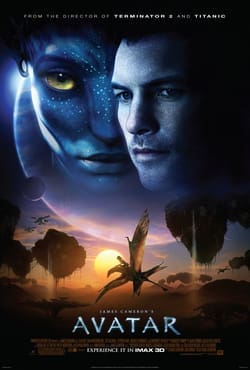
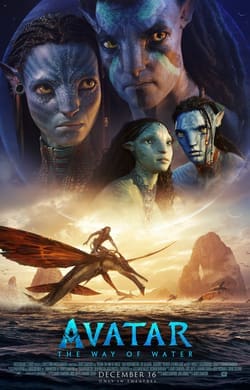
Avatar
Avatar (2009), followed by The Way of Water (2022) and Fire and Ash (2025), forms a long-running cinematic project that places ecology at the center of blockbuster imagination. Rather than envisioning a transformed Earth, the saga displaces its Solarpunk intuitions onto Pandora—a living world where culture, technology, and ecosystems operate as a single relational system, organized around balance rather than extraction.
The series remains ambivalent from a Solarpunk perspective: its ecological future exists elsewhere, filtered through colonial encounter and epic conflict, while the city appears only as an engine of exploitation. Yet Avatar performs a crucial cultural function by proving that harmony, interdependence, and environmental care can sustain mass appeal without apocalyptic collapse—opening an imaginative space that Solarpunk must now bring back home, from distant planets to Earth itself.[9]
We hope to see an optimistic ending!

Studio Ghibli
Films from Studio Ghibli, while not explicitly labeled as Solarpunk, strongly embody the movement’s core values of environmental consciousness, social harmony, and the integration of technology with nature.
For example, Nausicaä of the Valley of the Wind (1984) presents an early and influential vision of ecological restoration, coexistence, and moral responsibility in a damaged world. Princess Mononoke (1997) explores the tension between ecosystems and human industrial expansion, while Spirited Away (2001) celebrates the interconnectedness of all living beings.
The Boy and the Heron (2023) reflects on grief, transformation, and responsibility across generations, using a surreal natural–spiritual world to suggest that ecological balance and personal growth emerge through care, memory, and the acceptance of impermanence.[10]
Across these works, strong and resilient female protagonists play central roles, aligning with Solarpunk’s emphasis on individual agency within collective futures. Visually, these films resonate with Solarpunk aesthetics through lush landscapes and technologies interwoven — sometimes tensely, sometimes harmoniously — with the natural world.



Appleseed
Appleseed (2004) features a female protagonist, a soldier who survived a global war, arriving in the futuristic city of Olympus.
The city incorporates several Solarpunk-adjacent elements, including greenery integrated into advanced architecture, the use of renewable energy such as solar power, and hovering vehicles. Together, these elements present a vision of a technologically sophisticated society that remains visually and structurally connected to nature.[11]
Dear Alice
Dear Alice (2023) is a Japanese animated short film created and broadcast as a yogurt commercial and set entirely within a Solarpunk future.
From an aesthetic perspective, the film is Solarpunk throughout, depicting lush urban greenery, human-scale architecture, and advanced technology seamlessly integrated with everyday life. Dear Alice has become one of the most frequently referenced visual examples of Solarpunk, while also being widely discussed and contested due to its origin as marketing for a consumer product — raising questions about the appropriation of Solarpunk imagery for advertising purposes.[12]

An Appeal to the Filmmakers Around the World
Why don’t you latch up on the Solarpunk topic? You can unleash your creativity and compose a thrilling story. As in every society, also a Solarpunk one, there will be plenty to explore. Conflict and challenges, as well as harmony and happiness. You might want to make something out of it, and be a catalyst!
Sources:
[1] https://encodeur.movidone.com/getimage/-RxfybKSOG7UnQZnshsE37k1Hp2CV5FjcOZQpYu0DcAkJF_B2-ecckqtKYdMAJAJXr-BNBAaeHhAaAhv5Y7UDoJpxJwc–OmnYwKscW0nFT8wbCqT1W5pcDZrlWVDSpSg17518fME_Rc8S9255ZQML_MslUEdkON3y-L6jQLbdoRncyYrsJPqXyuYc3hVT5xTg1r-CzpTYbY_i6lpaSebZgj
[2] https://en.wikipedia.org/wiki/Logan%27s_Run_(film)
[3] https://en.wikipedia.org/wiki/WALL-E
[4] https://press.disney.co.uk/press-kit/tron-ares-press-kit
[5] https://press.disney.co.uk/press-kit/black-panther-wakanda-forever
[6] https://www.cine-dossiers.fr/wp-content/uploads/2023/10/CD2023_La-belle-verte_compressed.pdf
[7] https://solarpunk.it/waiting-for-the-sun/2021/
[8] https://www.studiocanal.com/title/visit-to-a-green-planet-1996/
[9] https://en.wikipedia.org/wiki/Avatar_(franchise)
[10] https://encodeur.movidone.com/getimage/s584QrbvwGjwufKlqe4_rGQ25-3cbkPd1w8D9gPAz_skJNFEj5FkKmnzvOG2IIVQlXV6TCSpyu5bfOvz7dsxiN3-5qh2oS-O0fHsU4gJkGSljYkWC4zqp8vQTTqqfJQEwySnUrFDHOLdl4wUAI9YnwZem6KGtIOj8U8FYlVhJ_ino-uy-y9VH5pWkxR98iOTMlQ3Pt7JPOdhgCaiWMH4SaT7
[11] https://en.wikipedia.org/wiki/Appleseed_(2004_film)
[12] https://nerdist.com/article/dear-alice-solarpunk-anime-short-studio-ghibli-composer/